

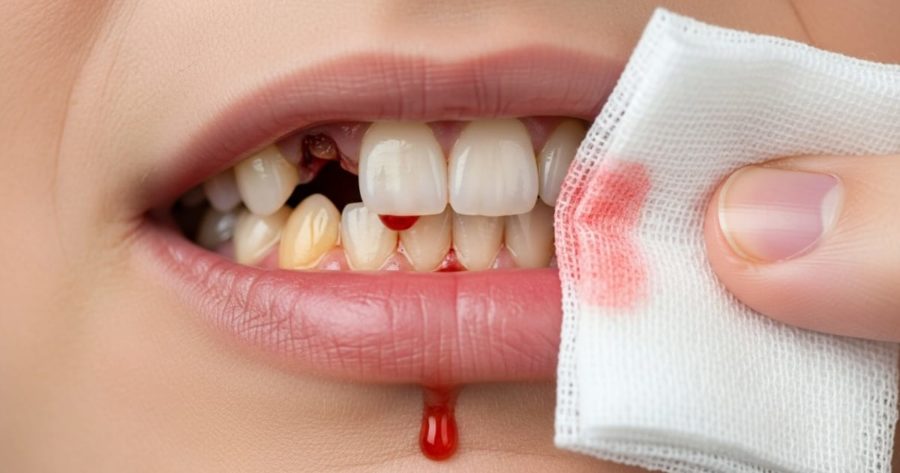
Seeing blood after having a tooth removed can feel alarming. However, a small amount of bleeding after tooth extraction is usually a normal part of early healing. The extraction leaves an open socket in the gum and bone, so the body must form a blood clot to protect the area.
Light oozing may continue during the first several hours. Your saliva may also look pink or red because even a small amount of blood can change its color. Active bleeding that fills your mouth, forms large clots, or continues despite steady pressure is different and may require professional care.
Understanding what is normal, how to protect the extraction site, and when to contact a dentist can make your recovery safer and less stressful.
Why Does an Extraction Site Bleed?
When a tooth is removed, small blood vessels in the surrounding gum and bone are affected. Bleeding begins as the body starts its natural healing process.
A clot should gradually form inside the empty socket. This blood clot after extraction acts as a protective layer over the underlying bone and nerves. It also supports the development of new tissue as the socket heals.
The dental team will normally place gauze over the area and ask you to bite down before leaving the office. This pressure helps slow the bleeding and allows the clot to form.
Some oozing can continue after you return home. It does not always mean that something has gone wrong.
How Much Bleeding Is Considered Normal?
A small amount of blood, light oozing, or pink saliva is generally expected during the first day. You might notice a blood stain on the gauze or a metallic taste in your mouth.
The bleeding should gradually slow rather than become stronger. It may briefly restart if you talk excessively, spit, rinse forcefully, exercise, or disturb the socket with your tongue.
The amount can also depend on the type of extraction. A surgical extraction or wisdom tooth removal may involve more tissue than a simple extraction. Your health, medications, and the location of the tooth can also affect the early healing process.
Patients receiving tooth extraction aftercare in Cypress, TX should follow the instructions given by their dental team because individual recovery needs can vary.
How Long Does Bleeding Last After Tooth Extraction?
Many patients want to know, how long does bleeding last after tooth extraction? Noticeable bleeding often slows within a few hours when firm pressure is applied correctly. Mild oozing or blood-tinged saliva may continue for up to 24 hours, and some people may notice a slight pink color for longer.
The extraction site should not keep releasing thick, bright red blood without improvement. It is also not normal for gauze to become heavily soaked again and again after you have applied steady pressure as directed.
If bleeding stops and then restarts, think about what may have disturbed the clot. Vigorous rinsing, smoking, using a straw, heavy lifting, or touching the socket are common causes.
How to Stop Bleeding After Tooth Extraction
If the socket begins bleeding again, remain calm and sit upright. Take a clean piece of gauze, lightly dampen it, and place it directly over the extraction site. Bite down with firm, steady pressure for about 30 minutes.
Keep the gauze in position during that time. Removing it every few minutes to check the area can prevent a stable clot from forming.
To help stop bleeding after tooth extraction:
- Sit upright and keep your head raised.
- Place clean, slightly damp gauze directly over the socket.
- Apply continuous biting pressure for 30 minutes.
- Avoid talking or moving the gauze while applying pressure.
- Replace it and repeat once if active bleeding continues.
- Rest and avoid physical activity.
Do not stuff several loose pieces of tissue into the socket. Paper tissue can break apart and stick to the wound. Use the gauze provided by your dental office or another clean material recommended by your dentist.
If firm pressure does not control the bleeding, contact your dental provider.
What Should You Avoid During the First 24 Hours?
Protecting the clot is one of the most important parts of tooth extraction recovery. Actions that create pressure or suction inside the mouth can loosen it and cause bleeding to begin again.
During the first 24 hours, avoid forceful spitting, vigorous rinsing, drinking through a straw, smoking, and touching the extraction site. Do not pull at stitches or repeatedly explore the socket with your tongue.
Avoid hot foods and drinks while your mouth is numb. Choose soft foods and chew on the opposite side. Hard, sharp, or crunchy foods may irritate the wound.
Heavy lifting, bending, and strenuous exercise can raise blood pressure and contribute to renewed bleeding. Rest for the period recommended by your dentist.
After 24 hours, you may usually begin gentle warm saltwater rinses if your dental team recommends them. Do not swish aggressively.
Can Medications Affect Post-Extraction Bleeding?
Certain medications can make bleeding last longer. These may include prescribed blood thinners, aspirin, and some nonprescription products. Certain medical conditions can also interfere with normal clotting.
Tell your dentist about every prescription, supplement, and nonprescription medicine you take before the extraction. Do not stop a prescribed blood thinner without instructions from the healthcare professional who manages it. Suddenly stopping important medication can create serious health risks.
If you take medicine that affects clotting, your dentist may provide a personalized plan for controlling post-extraction bleeding.
Use pain medicine only as directed. Do not place aspirin directly on the gum or socket because it can damage the tissue.
What Is Not Considered Normal Bleeding?
Lightly blood-stained saliva is different from uncontrolled bleeding. Contact a dentist if thick, bright red blood continues to flow, the mouth repeatedly fills with blood, or gauze becomes heavily soaked despite correctly applied pressure.
You should also seek help if bleeding becomes stronger after it had been improving or if you develop weakness, dizziness, faintness, or difficulty remaining alert.
An emergency dentist in Cypress, TX can assess the socket, identify why it is still bleeding, and provide appropriate treatment. Do not drive yourself if you feel faint or unwell.
Call emergency medical services if bleeding is severe or occurs with difficulty breathing or swallowing, rapidly increasing facial or neck swelling, fainting, confusion, or another serious symptom.
Does Bleeding Mean You Have Dry Socket?
Bleeding by itself does not usually mean you have dry socket. Dry socket happens when the protective clot does not form properly, dissolves too early, or becomes dislodged.
The main warning sign is strong or increasing pain several days after the extraction. The pain may spread toward the ear, temple, or jaw. You may also notice a bad taste, bad breath, or an extraction site that appears empty.
Dry socket does not always cause active bleeding. If pain becomes worse instead of gradually improving, contact your dentist for an examination.
How Can You Protect the Blood Clot?
Rest during the early recovery period and follow your written instructions closely. Keep your fingers and tongue away from the wound. Eat soft foods, drink carefully, and avoid activities that create suction in the mouth.
Do not smoke or vape during healing. These habits can disturb the clot and delay tissue repair. Continue brushing the rest of your teeth, but avoid brushing directly over the fresh socket until your dentist says it is safe.
Cypress Towne Dental can provide personalized guidance if bleeding continues or you are uncertain whether the extraction site is healing normally.
When Should You Call Your Dentist?
Knowing when to call a dentist after extraction is important. Contact the office if:
- Firm pressure does not slow the bleeding.
- Thick, bright red blood continues to flow.
- Gauze repeatedly becomes heavily soaked.
- Bleeding restarts and remains difficult to control.
- Pain or swelling becomes severe.
- You develop fever, pus, or a foul taste.
- You feel dizzy, weak, or unusually unwell.
When calling, explain when the extraction was completed, how long the bleeding has continued, what you have tried, and which medications you take. This information will help the dental team guide you.
Final Thoughts
A small amount of bleeding or pink saliva is generally normal after a tooth extraction. It should gradually decrease as a stable clot forms inside the socket.
Apply steady pressure with clean gauze, remain upright, rest, and avoid disturbing the area. Persistent or heavy extraction site bleeding should not be ignored. If you are recovering in Cypress, TX, contact your dental provider when bleeding does not improve or you notice other concerning symptoms.
Frequently Asked Questions
Is it normal to taste blood after an extraction?
Yes. A mild metallic taste can occur when a small amount of blood mixes with saliva. The taste should decrease as the bleeding slows. Contact your dentist if your mouth keeps filling with fresh blood or the bleeding remains active.
Should I sleep with gauze in my mouth?
No. Gauze should generally be removed before sleeping because it can become a choking risk. Use it while awake and applying steady pressure. Follow any different instructions given directly by your dentist.
Can I rinse my mouth if the socket is bleeding?
Avoid vigorous rinsing during the first 24 hours because it may disturb the clot. If active bleeding occurs, follow your dentist’s instructions and apply firm pressure with clean gauze. Contact the office if the bleeding does not stop.